Last Updated on: May 6, 2026
Contents
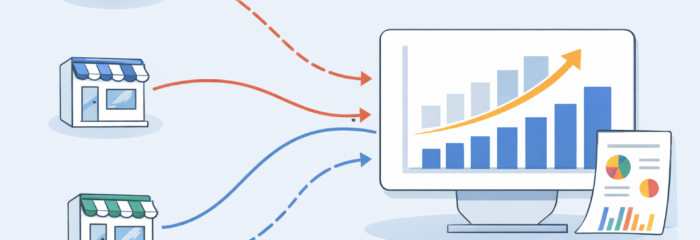
Franchise marketing data integration is the process of centralizing data from multiple agencies, platforms, and locations into one system so performance can be measured and optimized across the entire organization.
Without this, brands cannot accurately compare markets, reduce wasted ad spend, or understand true customer acquisition cost (CAC).
Most franchise brands don’t have a marketing problem.
They have a visibility problem.
If you cannot trust your data, you cannot trust your decisions. And if you cannot compare performance across markets, you are almost certainly wasting budget.
This is the problem we solved. McGaw.io, led by CEO Dan McGaw, a martech and analytics expert with 25+ years of experience building data-driven growth systems, partnered with this franchise brand to fix their marketing data from the ground up.
The Challenge: A National Brand Without a Unified View of Marketing
Franchise brands spend millions on digital marketing, but most cannot clearly see what is working.
Data is split across agencies, platforms, and locations. Reporting is inconsistent. Optimization happens in silos.
The result: wasted spend, slow decision-making, and no clear view of customer acquisition performance.
Our client’s media reporting was split across five different agencies, each operating with its own tracking, reporting, and optimization logic.
At the corporate level, answering simple questions was difficult:
- Which markets were acquiring members most efficiently?
- Which campaigns were driving the best results?
- How much media spend was wasted targeting existing members?
Even basic reporting required manual work for basic insights.
The corporate team spent dozens of hours each month pulling reports from multiple agencies and stitching together spreadsheets just to understand basic media performance by franchise location.
Without a unified data foundation, national optimization was nearly impossible.
Why Franchise Marketing Data Breaks Down
Franchise brands almost always face the same issue.
- Multiple agencies manage media independently
- Each uses different tracking and attribution models
- Reporting lives in separate systems
- No shared definition of a “conversion”
This creates a system where:
- performance cannot be compared across markets
- leadership cannot trust the data
- optimization happens in silos. (Learn how to audit your martech stack.)
The Hidden Cost of Fragmented Marketing Data
This is not just a reporting issue. It directly impacts revenue.
- High-performing markets are underfunded
- Low-performing campaigns continue to receive budget
- Existing customers are repeatedly targeted with acquisition spend
- Leadership makes decisions based on incomplete or conflicting data
Most teams accept this as normal.
It is not.
The Strategy: Centralize and Standardize Franchise Marketing Data
Solving the problem required more than new dashboards. It required restructuring how marketing data was owned and managed across the organization.
McGaw and our client worked together to build a centralized data architecture designed to support both reporting and activation.
The first step was implementing Segment as the Customer Data Platform (CDP). Segment was deployed across the website to collect first-party behavioral data from visitors and members, including page views, form submissions, and account activity.
Segment acts as the central data collection layer, capturing first-party customer data and sending it to both the data warehouse and downstream marketing tools. Modern marketing teams use a customer data platform (CDP) to unify tracking, attribution, and activation across their stack.
This ensures every system uses the same consistent data.
This data flows through Segment and is stored in BigQuery as the centralized marketing data warehouse, creating a consistent first-party dataset that can be used for reporting, analysis, and audience building.
With this foundation in place, marketing systems could be connected through a shared data layer.
Now the biggest opportunity sat inside the advertising ecosystem.
Franchisees had historically worked with different media vendors, each using their own pixels, tags, and conversion definitions. The result was a sprawling set of inconsistent tracking systems across the brand.
It was time for a strategic shift, albeit one that came with tradeoffs.
Standardizing tracking meant agencies lost control over how they defined and reported performance.
But without that control shift, true cross-market optimization would never be possible.
Instead of allowing each agency to run independent tracking, the brand standardized conversion tracking through corporate-owned pixels and shared them with media partners.
Segment played a central role in making this possible.
With Segment acting as the CDP, audiences could be activated using unified first-party data and automatically synced to multiple advertising platforms.
This allowed the corporate team to distribute standardized audience segments—such as leads, members, and suppression lists—across multiple ad accounts while keeping the underlying customer data centralized.
The rollout required auditing and replacing a large number of custom tracking tags and coordinating implementation with media agency partners.
This was not a quick win.
But this is the work most companies avoid.
And it is exactly why most companies never fix their data problem.
Before vs After: What Changed
Before
- Reporting required manual aggregation
- No consistent conversion tracking
- Agencies optimized in isolation
- No visibility into wasted spend
After
- Automated reporting across all locations
- Standardized conversion definitions
- Centralized audience management
- Cross-market performance comparison
Once the data was unified, something important happened.
The team could finally trust what they were seeing.
And once trust exists, optimization becomes possible.
The Result: A Unified View of National Media Performance
With centralized data and standardized tracking in place, the brand gained something most franchise organizations lack:
A trusted system for making marketing decisions.
This changed how budget was allocated, how campaigns were optimized, and how performance was evaluated across the business.
Reporting that once required days of manual work now happens automatically.
Segment continuously collects first-party customer data from the website and sends it into BigQuery, where the marketing team can analyze performance across all locations and channels.
At the same time, Segment orchestrates audience syncing to advertising platforms.
Media suppression audiences now happens with a few clicks, instantly pushing those updates across dozens of advertising accounts.
Previously, this level of coordination simply wasn’t possible.
The impact is both operational and strategic:
- Media spend can be optimized nationwide instead of market by market
- Existing members are automatically excluded from acquisition campaigns
- Lead acquisition performance can be compared across franchises
- Audience updates propagate across advertising platforms in near real time
Most brands never reach this point.
Not because the technology is unavailable.
But because standardizing data across teams, agencies, and platforms requires alignment, discipline, and execution.
That is the real barrier.
For the first time, this brand can see how marketing actually drives growth across the entire organization.
Not by market. Not by channel. But as a unified system.
That is what makes real optimization possible.
FAQs
What is franchise marketing data integration?
Franchise marketing data integration centralizes data from multiple locations, agencies, and platforms into a single system for reporting, analysis, and activation.
Why is marketing data fragmented in franchise organizations?
Because different agencies, platforms, and locations use separate tracking systems and reporting methods, leading to inconsistent data.
What is the benefit of using a CDP like Segment?
A CDP standardizes data collection and distributes consistent customer data across analytics, advertising, and marketing tools.
How does centralized data improve marketing performance?
It enables accurate measurement, reduces wasted spend, and allows optimization across all markets instead of isolated campaigns.
How do you standardize conversion tracking across franchise locations?
Replace agency-owned pixels with corporate-owned tracking tags shared across all media partners. Use a CDP like Segment to centralize event definitions so every location measures conversions the same way.
What role does a data warehouse play in franchise marketing?
A data warehouse like BigQuery stores all first-party marketing data in one place. It creates a single source of truth for cross-location reporting, audience analysis, and campaign performance comparison.
How can franchise brands reduce wasted ad spend?
Centralize audience data and use suppression lists to exclude existing customers from acquisition campaigns. Unified tracking also reveals which markets are overfunded relative to performance.
What is the first step to unifying franchise marketing data?
Implement a CDP to standardize data collection across all locations and agencies. This creates the foundation for consistent tracking, unified reporting, and cross-market optimization.
Fix Your Marketing Data Foundation
If your data lives across agencies, platforms, and spreadsheets, you are not optimizing.
You are reacting.
Most teams do not realize how much performance they are leaving on the table until they unify their data.
Use McGaw’s Stack Builder to map your current architecture and identify where visibility breaks down.
Or request a data audit to uncover where budget is being wasted and why.


Leave a Reply